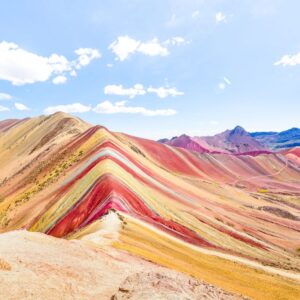
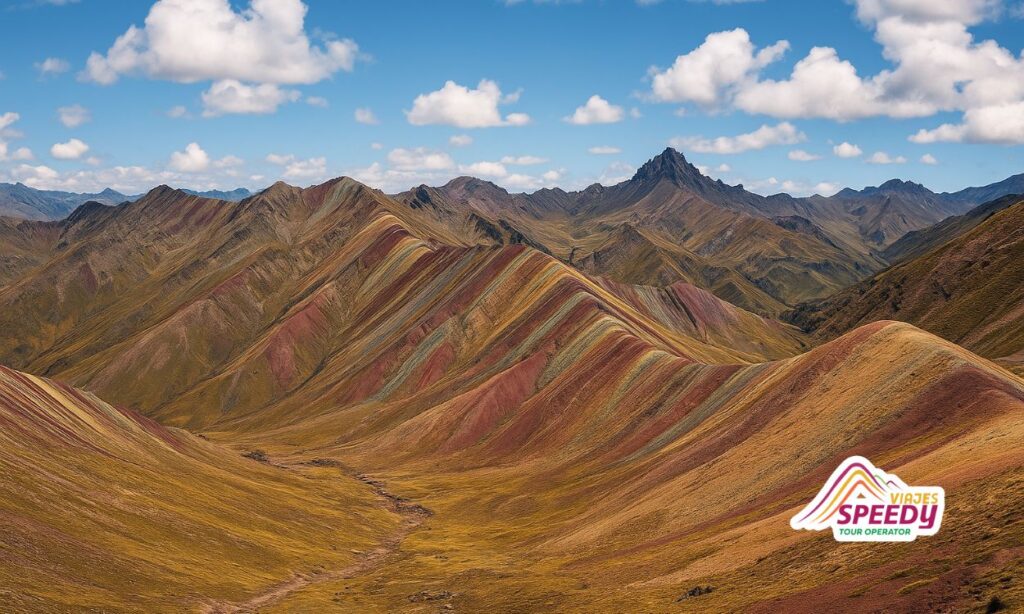
Palcoyo Mountain elevation is one of the most frequent questions travellers ask before planning their trip to this colourful destination in Peru. Located in the Andes, this natural wonder offers an easier alternative to the famous Vinicunca Rainbow Mountain while still boasting stunning landscapes and vibrant mineral-striped peaks. If you’re wondering about Palcoyo Mountain height, Palcoyo altitude in meters, or the Palcoyo trek elevation gain, this guide will provide all the details you need, from exact measurements to how the elevation might affect your trek.
What Is the Exact Palcoyo Mountain Elevation?
The Palcoyo Mountain elevation is approximately 4,900 meters (16,076 feet) above sea level. This makes it one of the highest tourist destinations in Peru, offering panoramic views of the Ausangate Mountain range and the Peruvian highlands. The Palcoyo Mountain height above sea level is only slightly lower than Vinicunca, which sits at about 5,200 meters (17,060 feet), making the difference noticeable for those sensitive to altitude.
Palcoyo vs. Vinicunca Elevation: Which Is Higher?
When comparing Palcoyo vs. Vinicunca elevation, Vinicunca is higher by around 300 meters (984 feet). While this may not seem like a huge difference, the lower altitude of Palcoyo makes it a more accessible trek for travellers who want to experience the beauty of rainbow-coloured mountains without the intense physical strain and risk of altitude sickness that comes with Vinicunca.
| Mountain | Elevation in Meters | Elevation in Feet |
|---|---|---|
| Palcoyo | 4,900 m | 16,076 ft |
| Vinicunca | 5,200 m | 17,060 ft |
How the Palcoyo Altitude Affects Visitors
The Palcoyo altitude is still considered extreme, as it exceeds 4,500 meters. At this height, oxygen levels are significantly reduced compared to sea level, and some visitors may experience symptoms of altitude sickness. Common effects include shortness of breath, mild headaches, dizziness, and fatigue. For this reason, acclimatisation in Cusco (which sits at 3,400 meters / 11,154 feet) for at least 1–2 days before your trek is highly recommended.
Tips for Coping With Palcoyo Elevation Difficulty
- Acclimatise: Spend a couple of days in Cusco or the Sacred Valley before visiting Palcoyo.
- Stay hydrated: Drink plenty of water to help your body adapt to the high altitude.
- Avoid alcohol: Alcohol can worsen dehydration and altitude sickness symptoms.
- Coca tea or leaves: A traditional Peruvian remedy for high-altitude discomfort.
- Walk slowly: The reduced oxygen levels make it harder to exert yourself, so take your time.
Palcoyo Trek Elevation Gain and Hiking Route
The Palcoyo trek elevation gain is relatively small compared to Vinicunca. From the parking lot, the hike to the viewpoint is only about 150–200 meters (492–656 feet) in elevation gain. This short and gentle trail makes Palcoyo an excellent choice for families, older travellers, and those not accustomed to strenuous hiking.
Palcoyo Hike Elevation Profile
- Starting altitude: ~4,700 meters (15,420 feet)
- Viewpoint altitude: ~4,900 meters (16,076 feet)
- Total gain: ~200 meters (656 feet)
The path is well-maintained and relatively flat, with a few gradual inclines. Along the way, you’ll encounter three colourful mountains, stone forests, and herds of alpacas grazing freely.
Palcoyo Mountain Range Altitude and Surroundings
Palcoyo belongs to the Vilcanota Mountain Range, part of the larger Andes range in southern Peru. The average Palcoyo mountain range altitude here is above 4,500 meters, meaning you’ll be surrounded by snow-capped peaks, glacial valleys, and high-altitude wildlife. The Ausangate Mountain, the highest in the region, towers over the landscape at 6,384 meters (20,945 feet).
Palcoyo Elevation in Feet and Meters
For reference:
- Palcoyo Peru elevation: 4,900 meters
- Palcoyo elevation in feet: 16,076 feet
- Palcoyo Rainbow Mountain altitude Peru: Same as above, since Palcoyo is often referred to as Palcoyo Rainbow Mountain due to its colourful mineral bands.
Why Palcoyo’s Lower Altitude Matters for Travellers
Even though the difference between Palcoyo and Vinicunca might seem small, it can make a big impact on your overall trekking experience. At 300 meters lower, Palcoyo is more manageable, especially if you’re short on acclimatisation time or prone to altitude-related symptoms. This is why many travellers choose Palcoyo for its combination of beauty, accessibility, and less demanding physical effort.
Best Time to Visit Palcoyo to Maximise Comfort at High Altitude
The best months to visit are during the dry season, from May to September, when clear skies offer the best views of the colourful mountains. During these months, daytime temperatures are cool but manageable, ranging from 5°C to 15°C (41°F to 59°F). At this altitude, mornings and evenings are very cold, so dress in layers.
Practical Tips for Visiting Palcoyo Mountain
- Bring warm clothing – The high elevation means chilly winds year-round.
- Use sunscreen – UV exposure is stronger at high altitudes.
- Hire a local guide – Learn about the geological and cultural history of the area.
- Bring snacks – Energy bars or dried fruit can help maintain your energy.
- Travel with a tour operator – Organised tours take care of transportation, permits, and guidance.
Frequently Asked Questions About Palcoyo Mountain Elevation
How high is Palcoyo Mountain?
Approximately 4,900 meters (16,076 feet) above sea level.
Is Palcoyo easier than Vinicunca?
Yes, mainly because it’s at a lower altitude and requires less hiking effort.
What is the Palcoyo hike elevation gain?
Around 150–200 meters from the parking area to the main viewpoint.
Can you get altitude sickness at Palcoyo?
Yes, due to the high elevation, but acclimatisation can reduce the risk.
Is Palcoyo worth visiting?
Absolutely — it offers a stunning, less crowded alternative to Vinicunca with equally beautiful views.
Book your Palcoyo Full Day Tour here and experience the beauty of Peru’s colourful mountains without the strenuous climb of Vinicunca.