Discover what makes the Tambopata Jungle stand out from the rest of the world’s rainforests. From unmatched biodiversity to exclusive species and sustainable tourism, this hidden gem in the Peruvian Amazon offers a unique ecological and cultural experience that no other jungle can replicate.
Nestled in the heart of southeastern Peru, the Tambopata rainforest is one of the most biologically rich and ecologically intact ecosystems on the planet. Unlike other Amazonian rainforests, Tambopata boasts unique species, minimal deforestation, and pioneering conservation efforts that make it a standout destination for nature lovers and explorers alike.
What Makes Tambopata Special?
Pristine and Protected: The Tambopata National Reserve
The Tambopata National Reserve spans over 274,000 hectares of untouched jungle. Unlike many other rainforest areas that face heavy logging or industrial pressure, Tambopata remains largely pristine due to strict conservation laws and limited access. This protected status ensures that visitors get to witness raw, untouched wilderness—a rarity even in the Amazon.
Tambopata vs Amazon Rainforest: What’s the Difference?
Although Tambopata is part of the greater Amazon Basin, it differs significantly from the general Amazon rainforestexperience found in Brazil or Colombia. Tambopata is:
- Less crowded with tourists
- More easily accessible from Puerto Maldonado
- Richer in certain types of flora and fauna due to elevation and climate variation
- Known for a higher concentration of macaws, monkeys, and butterflies
In short, while the Amazon is vast, Tambopata delivers intensity—more wildlife per square meter, more raw beauty, and more direct experiences.
Biodiversity in Tambopata: A Global Treasure
An Explosion of Life
Tambopata is often listed among the most biodiverse rainforests in South America. Scientists have recorded:
- Over 1,300 species of butterflies
- More than 600 bird species
- Nearly 200 mammal species
- Hundreds of amphibians and reptiles
This astonishing biodiversity is due to its location at the intersection of the Andes and the Amazon, a rare eco-transition zone. It’s one of the few places on Earth where you might spot a jaguar, giant river otter, capybara, and harpy eagle in a single day.
Nature Reserves in the Amazon: Why Tambopata Stands Out
Compared to other nature reserves in the Amazon, such as Manu or Yasuni, Tambopata combines accessibility with conservation. It’s close enough for short jungle tours yet remote enough to support thriving wildlife. For example, the Collpa de Guacamayos (macaw clay lick) is one of the largest and most active in the world, drawing hundreds of parrots and macaws every morning—a phenomenon not easily witnessed elsewhere.
Unique Rainforest Experiences in Tambopata
Jungle Experiences in Tambopata: Up Close and Wild
In Tambopata jungle tours, you’re not merely an observer—you’re a participant. Walks through dense canopies, nocturnal safaris, river canoeing, and canopy towers let you experience the jungle from multiple angles and depths.
Whereas some rainforests prioritize luxury lodges or large group tours, Tambopata emphasizes ecotourism and connection with nature. You’re more likely to sleep in an eco-lodge powered by solar panels and eat locally sourced food while guided by indigenous naturalists who know every inch of the land.
Tambopata Ecotourism: Sustainability at Its Core
Tambopata ecotourism isn’t a trend—it’s a philosophy. Conservation and community development go hand-in-hand. Many lodges support local education, health care, and wildlife monitoring programs, ensuring your visit has a positive impact on both the ecosystem and its people.
You’re not just traveling—you’re contributing to preservation.
Wildlife in Tambopata: A Photographer’s Paradise
Iconic Animals You Can’t See Anywhere Else
Some animals are incredibly elusive across the Amazon basin but are almost guaranteed sightings in Tambopata, such as:
- Giant river otters (critically endangered)
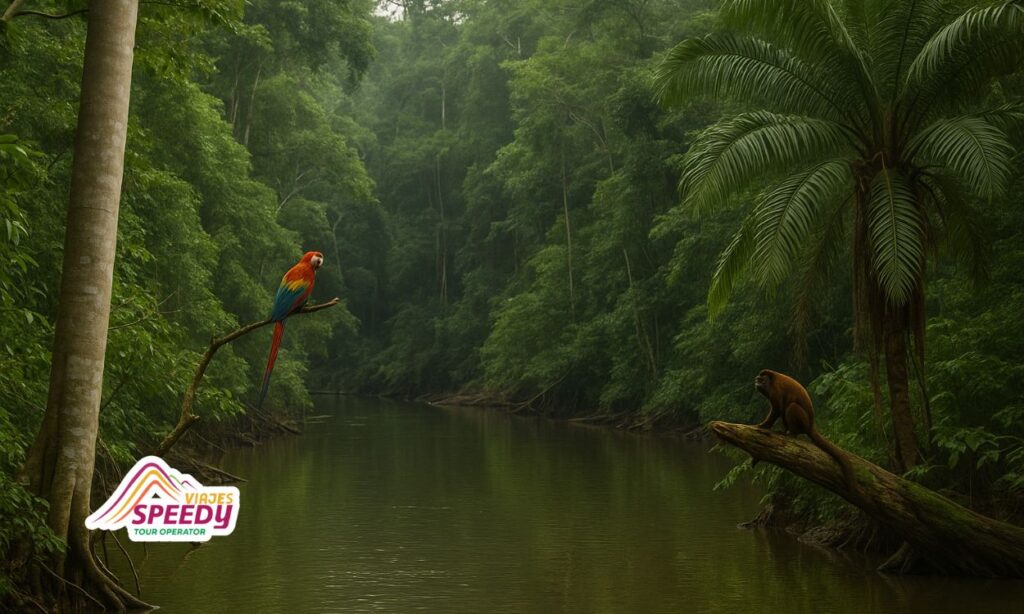
- Blue-and-yellow macaws
- Red howler monkeys
- Capuchins and squirrel monkeys
- Sloths and anteaters
Thanks to the undisturbed environment and specialized guides, wildlife encounters here are more frequent and natural than in more commercialized Amazon destinations.
Why Tambopata is One of the Best Rainforests to Visit in Peru
While other rainforests like Manu or Iquitos also offer rich biodiversity, Tambopata wins in terms of:
- Accessibility (flights to Puerto Maldonado)
- Quality of wildlife encounters
- Commitment to sustainable tourism
- Range of accommodations for all budgets
- Personalized, immersive tours
It’s one of the best rainforests to visit in Peru whether you’re traveling solo, as a couple, with family, or as a photographer on assignment.
Comparing Tambopata vs Manu Rainforest
Both Tambopata and Manu are celebrated for their biodiversity, but they offer different experiences:
- Tambopata: Better infrastructure, shorter tour durations (2–4 days), closer to an airport, ideal for first-timers.
- Manu: Requires longer itineraries, more physically demanding, richer in certain bird species, but harder to reach.
For travelers with limited time who still want a world-class rainforest adventure, Tambopata is the smarter choice.
Amazon Jungle Differences: What Tambopata Teaches Us
In many parts of the Amazon, uncontrolled development, illegal logging, and over-tourism have taken their toll. Tambopata is a shining example of what the Amazon could be—a preserved Eden where modern tourism supports nature rather than exploiting it.
Planning Your Rainforest Tour in Tambopata
If you’re inspired to explore the Tambopata rainforest in Peru, the best time to go is during the dry season (May to October), when wildlife is most active, and trails are accessible.
Check out our 2-day Tambopata rainforest tour to experience:
- Canoe rides through winding jungle rivers
- Night walks with expert guides
- Birdwatching in hidden canopies
- Macaw clay lick observation